

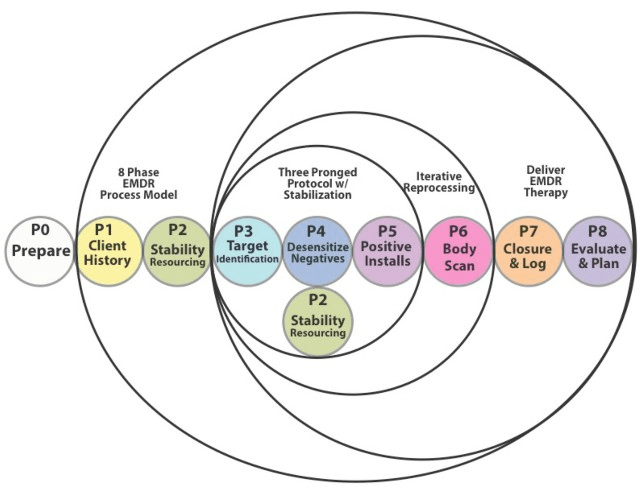
眼动脱敏再处理(EMDR)是世界领先的创伤治疗方法,也用于治疗压力,焦虑症,情绪障碍和自闭症。EMDR治疗分为8个阶段。在第二阶段,治疗师使用缓慢的双向刺激来舒缓神经系统。作为创伤的主要治疗方法,EMDR帮助无数人过上了更幸福,更充实的生活。尽管治疗师无需任何工具即可进行EMDR治疗,但触觉振动对治疗有很多好处。
Bumble BLS Buzzies可通过无线应用程序控制的振动速度和强度,参与神经系统,并使客户更充分地融入治疗过程。随着远程医疗变得越来越普遍和必要,Buzzies将使您能够远程管理EMDR治疗。
在紧张时,我们所有人都感受过自己的“战斗还是逃跑”本能。但这并不意味着我们处于人身危险之中。在当今世界,面对公开演讲,艰巨的工作任务或与亲人讨论困难的话题时,我们可能会感到“战斗还是逃跑”的冲动。这些情况会导致压力荷尔蒙充满神经系统。但是,我们可以通过双向刺激利用身体调节情绪的自然能力。
通常通过以交替的节奏方式将振动引入到身体的左侧和右侧来实现双向刺激。但是,双向刺激也可以通过眼球运动和其他感觉触发来诱发。 (请访问“产品”页面以获取优质的双向刺激工具)。双向刺激可以帮助在压力前、中、后恢复平静感,并可以在眼动脱敏再处理(EMDR)治疗期间帮助大脑再次处理创伤记忆。
当大脑过度刺激或停止运转时,其处理情绪的能力就会受到抑制。通过破坏人体的搏斗或逃跑反应,双向刺激有助于使大脑保持在其“耐受范围”之内,这是处理情绪的理想认知觉醒水平。双向刺激对儿童和成人都是一个强大的工具,可用于促进EMDR治疗,提高谈话治疗的效率,在游戏治疗期间鼓励健康的情绪反应或在家庭,学校或工作中保持镇定。
Bilateral Stimulation
Bridges, R., Di Loreto, D., Kade, E., & Serin, A. (2019). QEEG Evidence for Stress-Reducing Effects of BLAST Technology in Hispanic Individuals. Archives of Clinical Neuropsychology, 34(7), 1240-1240.
Kamińska, D., Smółka, K., Zwoliński, G., Wiak, S., Merecz-Kot, D., & Anbarjafari, G. (2020). Stress Reduction Using Bilateral Stimulation in Virtual Reality. IEEE Access, 8, 200351-200366.
f
Leal-Junior, E. C. P., Casalechi, H. L., Machado, C. D. S. M., Serin, A., Hageman, N. S., & Johnson, D. S. (2019). A Triple-blind, Placebo-controlled Randomized Trial of the Effect of Bilateral Alternating Somatosensory Stimulation On Reducing Stress-related Cortisol and Anxiety During and After the Trier Social Stress Test. Journal of Biotechnology and Biomedical Science, 2(1), 22.
Meconcelli, G., Bazzoni, G., & Casu, C. (2020). Auriculotherapy for Stress Management as Self-Help in Isolation Situations (COVID 19). International Journal of Pharmaceutical and Phytopharmacological Research, 10(3), 1-2.
Serin A, Hageman N S, Kade E. (2018) The Therapeutic Effect of Bilateral Alternating Stimulation Tactile Form Technology on the Stress Response. , J Biotechnol Biomed Sci 1(2), 42-7.
Serin, A., Hageman, N. S., & Kade, E. JOURNAL OF BIOTECHNOLOGY AND BIOMEDICAL SCIENCE.
Tripp, T. (2007). A short term therapy approach to processing trauma: Art therapy and bilateral stimulation. Art Therapy, 24(4), 176-183.
EMDR
Acierno, R., Hersen, M., Van Hasselt, V. B. & Tremont, G., & Meuser, K. T. (1994). Review of the validation and dissemination of eye–movement desensitization and reprocessing: a scientific and ethical dilemma. Clinical Psychology Review, 14, 287– 299.
Acierno, R., Tremont, G., Last, C., & Montgomery, D. (1994). Tripartite assessment of the efficacy of eye–movement desensitization in a multi–phobic patient. Journal of Anxiety Disorders, 8, 259–276.
Acarturk C, Konuk E, Cetinkaya M. (2016) The efficacy of eye movement desensitization and reprocessing for post-traumatic stress disorder and depression among Syrian refugees: results of a randomized controlled trial. , Psychol Med 46(12), 2583-93.
Aduriz, M. E., Bluthgen, C., & Knopfler, C. (2009). Helping child flood victims using group EMDR intervention in Argentina: treatment outcome and gender differences. International Journal of Stress Management, 16, 138-153.
Ahmad, A., Larsson, B., & Sundelin-Wahlsten, V. (2007). EMDR treatment for children with PTSD: Results of a randomized controlled trial. Nordic Journal of Psychiatry, 61, 349–354.
Ahmad, A., & Sundelin-Wahlsten, V. (2007). Applying EMDR on children with PTSD. European Child & Adolescent Psychiatry, In Press, Corrected Proof, Available online 10 September 2007.
Amundsen, J. E., & Kårstad, K. (2006). Om bare Jeppe visste – EMDR og rusbehandling. Tidsskrift for Norsk Psykologforening, 43, 469–475.
Andrade, J., Kavanagh, D., & Baddeley, A. (1997). Eye–movements and visual imagery: A working memory approach to the treatment of post–traumatic stress disorder. British Journal of Clinical Psychology, 36, 209–223.
Armstrong, M. S., & Vaughan, K. (1996). An orienting response model of Eye Movement Desensitization. Journal of Behavior Therapy & Experimental Psychiatry, 27, 21–32.
Aubert-Khalfa, S., Roques, J., & Blin, O. (2008). Evidence of a decrease in heart rate skin conductance responses in PTSD patients after a single EMDR session. Journal of EMDR Practice and Research, 2, 51–56.
Banerjee S, Argaez C. (2017) Eye Movement Desensitization and Reprocessing for Depression, Anxiety, and Post-Traumatic Stress Disorder: A Review of Clinical Effectiveness. Canadian Agency for Drugs and Technologies in Health. , Ottawa (ON)
Beere, D., B., Simon, M., J., & Welch, K. (2001). Recommendations and illustrations for combining hypnosis and EMDR in the treatment of psychological trauma. American Journal of Clinical Hypnosis, 43, 217–231.
Beutler, L. E. (2003). Introduction to the special series on EMDR. Journal of Clinical Psychology, 59, 1451–1452.
Bossini, L., Fagiolini, A., & Castrogiovanni, P. (2007). Neuroanatomical changes after eye movement desensitization and reprocessing (EMDR) treatment in posttraumatic stress disorder. Journal of Neuropsychiatry Clinical Neuroscience, 19, 475–476.
Broad, R. D., & Wheeler, K. (2006). An adult childhood medical trauma treated with psychoanalytic psychotherapy and EMDR: A case study. Psychiatric Care 42, 95– 105.
Brown, K. W., McGoldrick, T., & Buchanan, R. (1997). Body Dysmorphic Disorder: seven cases treated with Eye Movement Desensitization and Reprocessing. Behavioural & Cognitive Psychotherapy, 25, 203–207.
Boudewyns, P. A., Stwerka, S. A., Hyer, L. A., Albrecht, J. W., & Sperr, E. V. (1993). Eye Movement Desensitization for PTSD of combat: A treatment outcome pilot study. The Behavior Therapist, 16.
Bryant, R. A., Harvey, A. G., Gordon, E., & Barry, R. J. (1995). Eye movement and electrodermal responses to threat stimuli of post–traumatic stress disorder. International Journal of Psychophysiology, 20, 209–213.
Carlson, J. G., Chemtob, C. M., Rusnak, K., Hedlund, N. L., & Muraoka, M. Y. (1998). Eye Movement Desensitization and Reprocessing (EMDR). Treatment for combat–related posttraumatic stress disorder. Journal of Traumatic Stress, 11, 3–24
Carlson, J. G., Chemtob, C. M., Rusnak, K., & Hedlund, N. L. (1996). Eye Movement Desensitization and Reprocessing treatment for combat PTSD. Psychotherapy, 33, 104–113.
Chen, Y.-R., Hung, K.-W., Tsai, J.-C., Chu, H., Chung, M.-H., Chen, S.-R., & et al. (2014). Efficacy of eye-movement desensitization and reprocessing for patients with posttraumatic-stress disorder: a meta-analysis of randomized controlled trials. PloS ONE, 9, (8), e103676
Coubard, O. A. (2015). Eye movement desensitization and reprocessing (EMDR) re- examined as cognitive and emotional neuroentrainment. Frontiers in Human neuroscience, 8
Coubard, O. A. (2016). An integrative model for the neural mechanism of eye movement desensitization and reprocessing (EMDR). Frontiers in Behavioral Neuroscience, 10, (52), 1–17. doi:10.3389/fnbeh.2016.00052.
Cocco, N., & Sharpe, L. (1993). An auditory variant of Eye Movement Desensitization in a case of childhood post–traumatic stress disorder. Journal of Behavior Therapy & Experimental Psychiatry, 24, 373–377.
Colelli, G., & Patterson, B. (2008). Three cases reports illustrating the use of the protocol for recent traumatic events following the World Trade Center terrorist attack. Journal of EMDR Practice and Research, 2, 114–123.
Cotraccia, A. J. (2012). Adaptive information processing and a systemic biopsychosocial model. Journal of EMDR Practice Research, 6, (1), 27–36.
Cvetek, R. (2008). EMDR treatment of distressful experiences that fail to meet the criteria for PTSD. Journal of EMDR Practice and Research, 2, 2–14.
Davidson, P. & Parker, K. (2001). Eye movement desensitization and reprocessing (EMDR): a meta–analysis. Journal of Consulting and Clinical Psychology, 69, 305 – 316.
DeBell, C. & Jones, R. D. (1997). As good as it seems? A review of EMDR experimental research. Professional Psychology: Research and Practice, 28, 153–163.
Devilly, G. J., & Spence, S. H. (1999). The relative efficacy and treatment distress of EMDR and a cognitive–behavior trauma treatment protocol in the Amelioration of posttraumatic stress disorder. Journal of Anxiety Disorders, 13, 131–157.
Diehle, J., Opmeer, B. C., Boer, F., Mannarino, A. P., & Lindauer, R. J. L. (2015). Trauma- focused cognitive behavioral therapy or eye movement desensitization and reprocessing: what works in children with posttraumatic stress symptoms? A randomized controlled trial. European Child & Adolescent Psychiatry, 24, 227–236.
DiGiorgio, K. E., Arnkoff, D. B., Glass, C.R., Lyhus, K. E., & Walter, R. C. (2004). EMDR and theoretical orientation: A qualitative study of how therapists integrate eye movement desensitization and reprocessing into their approach to psychotherapy. Journal of Psychotherapy Integration, 14, 227–252.
de Jongh, A., Ernst, R., Marques, L., & Hornsveld, H. (2013). The impact of eye movements and tones on disturbing memories involving PTSD and other mental disorders. Journal of Behavior Therapy and Experimental Psychiatry, 44, 477–483.
de Jongh, A., van den Oord, H. J. M., & teten Broeke, E. (2003). Efficacy of eye movement desensitization and reprocessing in the treatment of specific phobias: Four single–case studies on dental phobia. Journal of Clinical Psychology, 58, 1489–1503
de Jongh, A., & ten Broeke, E. (2008). Treatment of specific phobias with EMDR. Journal of EMDR Practice and Research, 1, 46–56.
de Jongh, A., Broeke Ten, E., & Renssen, M. R. (1999). Treatment of specific phobias with eye movement desensitization and reprocessing (EMDR): Protocol, empirical status, and conceptual issues. Journal of Anxiety Disorders, 1–2, 69–85.
de Roos, C., Greenwald, R., den Hollander-Gijsman, M., Noorthoorn, E., van Buuren, S. & Jongh A. (2011). A randomised comparison of cognitive behavioural therapy (CBT) and eye movement desensitization and reprocessing (EMDR) in disaster-exposed children. European Journal of Psychotraumatology, 1–11.
Devilly, G. J., Spence, S. H., & Rapee, R. M. (1998). Statistical and reliable change with eye movement desensitization and reprocessing: Treating trauma within a veteran population. Behavior Therapy, 29, 435–455.
Dunn, T: M., Schwartz, M., Hatfield, R. W., & Wiegele, M. (1996). Measuring effectiveness of eye movement desensitization and reprocessing (EMDR) in non–clinical anxiety: a multi–subject, yoked–control design. Journal of Behavior Therapy and Experimental Psychiatry, 27, 231–239.
Dyck, M. J. (1993). A proposal for a conditioning model of eye movement desensitization treatment for posttraumatic stress disorder. Journal of Behavior Therapy & Experimental Psychiatry, 24, 201–210.
Dyregrov, A. (1993). EMDR – en ny metode for traumebehandling. Tidsskrift for Norsk Psykologforening, 30, 975–981.
Egli-Bernd, H. (2011). EMDR in dissociative processes within the framework of personality disorders: The impact of cognitions in the EMDR process: The “dialogue protocol”. Journal of EMDR Practice and Research, 5, 131–139.
Elofsson, U. O. E., von Scheele, B., Theorell, T., & Söndergard, H.P. (2008). Physiological correlates of eye movement desensitization and reprocessing. Journal of Anxiety Disorders, 22, 622–634.
Errebo, N., Knipe, J., Forte, K., Karlin, V., & Altayli, B. (2008). EMDR–HAP training in Sri Lanka following the 2004 Tsunami. Journal of EMDR Practice and Research, 2, 124– 139.
Fernandez, I. (2008). Treatment of a tsunami survivor with acute posttraumatic stress disorder. Journal of EMDR Practice and Research, 2, 156–159.
Fernandez, I., Gallinari, E., & Lorenzetti, A. (2003). A school-based eye movement desensitization and reprocessing intervention for children who witnessed the Pirelli building airplane crash in Milan, Italy. Journal of Brief Therapy, 2, 129–136.
Feske, U., & Goldstein A. J. (1997). Eye movement desensitization and reprocessing treatment for panic disorder: A controlled outcome and partial dismantling study. Journal of Consulting and Clinical Psychology, 65, 1026–1035.
Field, A., & Cottrell, D. (2011). Eye movement desensitization and reprocessing as a therapeutic intervention for traumatized children and adolescents: a systematic review of the evidence for family therapist. Journal of Family Therapy, 33, 374–388.
Fleming, J. (2012). The effectiveness of eye movement desensitization and reprocessing in the treatment of traumatized children and youth, Journal of EMDR Practice and Research, 6, (1), 16–26.
Forbes, D., Creamer, M., & Rycroft, P. (1994). Eye movement desensitization and reprocessing in posttraumatic stress disorder: a pilot study using assessment measures. Journal of Behavior Therapy & Experimental Psychiatry, 25, 113–120.
Forbes, D., Creamer, M., & Rycroft, P. Eye movement desensitization and reprocessing in PTSD: A pilot study using assessment measures. Journal of Behavior Therapy, 23, 113–120.
Foster, S., & Lendl, J. (1996). Eye movement desensitization and reprocessing four case studies of a new tool for executive coaching and restoring employee performance after setbacks. Consulting Psychology Journal: Practice & Research 48, 155–161.
Friedberg, F. (2001). (Ed.): Eye Movement Technique for Emotional Healing. Oakland, CA: New Harbinger Publications, Inc.
Gauvreau, P., & Bouchard, S. (2008). Preliminary evidence for the efficacy of EMDR in treating generalized anxiety disorders. Journal of EMDR Practice and Research, 2, 26–40.
Gelbach, R. A. (2008). Trauma, research, and EMDR: A disaster responder’s wish list. Journal of EMDR Practice and Research, 2, 146-155.
Grainger, R. D., Levin, C., Allan–Byrd, L., Doctor, R. M., & Lee, H. (1997). An empirical evaluation of Eye Movement Desensitization and Reprocessing (EMDR) with survivors of a natural disaster. Journal of Traumatic Stress, 10, 665–671.
Grand, D. (Ed.). (2001). Emotional healing at warp speed. The power of EMDR. New York: Harmony Books.
Grant, M., & Threlfo, C. (2003). EMDR in the treatment of chronic pain. Journal of Clinical Psychology, 58, 1505–1520.
Greenwald, R. (1994). Eye movement desensitization and reprocessing (EMDR): An overview. Journal of Contemporary Psychotherapy, 1, 15–34.
Greenwald, R. (1994). Applying eye movement desensitization and reprocessing (EMDR) to the treatment of traumatized children: Five case studies. Anxiety Disorders Practice Journal, 1, 83–97.
Greenwald, R. (1994). Eye movement desensitization and reprocessing (EMDR): An overview. Journal of Contemporary Psychotherapy, 24.
Greenwald, R. (1996). The information gap in the EMDR controversy. Professional Psychology: Research & Practice, 27, 67–72.
Greenwald, R. (1999). Eye Movement desensitization reprocessing (EMDR) in child and adolescent psychotherapy. New Jersey: Jason Aronson Inc.
Greenwald, R., McClintock, S. D., & Bailey, T. D. (2014). A controlled comparison of eve movement desensitization & reprocessing and progressive counting. Journal of Aggression, Maltreatment &Trauma, 22, (9), 981–996.
Goldstein, A. J., & Feske, U. (1994). Eye movement desensitizatiion and reprocessing for panic disorder: A case series. Journal of Anxiety Disorders, 8, 351–162.
Gunter, R. W., & Bodner, G. E. (2008). How eye movements affect unpleasant memories: Support for a working-memory account. Behaviour Research and Therapy, 46, 913– 931.
Harper, M. L., Rasolkhani-Kalhorn, T., & Drozd, J. F. (2009). On the neural basis of EMDR therapy: Insights from qEEG studies. Traumatology, 15, 81–95.
Hassard, A. (1993). Eye movement desensitization of body image. Behavioral Psychotherapy, 21, 157–160.
Heber, R., Kellner, M., & Yehuda, R. (2003). Salivary cortisol levels and the cortisol response to dexamethasone before and after EMDR: A case report. Journal of Clinical Psychology, 58, 1521–1530.
Hedstrom, J. (1991). On the function of enemies. the articulation and containment of the unthought self. Journal of Psychohistory, 22, 37–38.
Hekmat, H., Groth, S., & Rogers, D. (1994). Pain ameliorating effects of eye movement desensitization. Journal of Behavior Therapy and Experimental Psychiatry, 25, 121–
Herbert, J. D., & Mueser, K. T. (1992). Eye Movement Desensitivization: a critique of the evidence. Journal of Behavioural Therapy & Experimental Psychiatry, 23, 169–174.
Hornsveld, H. K., Houtveen, Jan. H., Vroomen, M., Kapteijn, I., & van den Hout, M. A. (2011). Evaluating the effect of eye movements on positive memories such as those used in resource development and installation. Journal of EMDR Practice and Research, 5, (4), 146–155.
Hyer, L. (1995). Use of EMDR in a «dementing» PTSD survivor. Clinical Gerontologist, 16, 70–73.
Hyer, L., & Brandsma, J. M. (1997). EMDR minus eye movement equals good psychotherapy. Journal of Traumatic Stress, 3, 515–522.
Högberg, G., Pagani, M., Sundin, Ö., Soares, J., Åberg-Wistedt, A., Tärnell, B., & Hällstrøm, T. (2007). On treatment with eye movement desensitization and reprocessing of chronic post-traumatic stress disorder in public transportation workers – A randomized controlled trial. Nordic Journal of Psychiatry, 61, 54–61.
Högberg, G., Pagani, M., Sundin, Ö., Soares, J., Åberg-Wistedt, A., Tärnell, B. et. al. (2008). Treatment of post-traumatic stress disorder with eye movement desensitization and reprocessing: Outcome is stable in 35 month follow-up. Psychiatry Research, 159, 101-108.
Jarero, I., Artigas, L., & Hartung, J. (2006). EMDR integrative group treatment protocol: A postdisaster trauma intervention for children and adults. Traumatology, 12, 121–129.
Jarero, I., Artigas, L., & Lopez Lena, M. M. (2008). The EMDR integrative group treatment protocol: Application with child victims of a mass disaster. Journal of EMDR Practice and Research, 2, 97–105.
Jarero, I., & Uribe, S. (2011). The EMDR protocol for recent critical incidents: Brief report of an application in a human massacre situation. Journal of EMDR Practice and Research, 5, (4), 156–165.
Jarero, I., Uribe, S. (2011). The EMDR protocol for recent critical incidents: Follow-up report of an application in a human massacre situation.
Jarero, I., Uribe, S., Artigas, L., & Givaudan, M. (2015). EMDR protocol for recent critical incidents: a randomized controlled trial in a technological disaster context. Journal of EMDR Practice and Research, 9, (4), 166–173.
Jayatunge, R. M. (2008). Combating Tsunami disaster through EMDR. Journal of EMDR Practice and Research, 2, 140–145.
Jeffries, F. W., & Davis, P. (2012). What is the role of eye movements in eye movement desensitization and reprocessing (EMDR) for post-traumatic stress disorder (PTSD)? A review. Behavioural and Cognitive Psychotherapy, 1–11.
Jensen, J. A. (1994). An investigation of eye movement desensitization and reprocessing (EMD/R) as a treatment for posttraumatic stress disorder (PTSD) symptoms of Vietnam combat veterans. Behavior Therapy, 25, 311–325.
Johnson, L. (1992). Videotape Review; eye movement desensitization of post–traumatic stress syndrome, The Milton H. Erickson Foundation Newsletter, Summer. Vol. 12, p. 6.
Johnson, L. (1992). Video Review; response by Dr. Johnson, The Milton H. Erickson Foundation Newsletter, Summer 1992, Vol. 12, p. 7.
Karatzias, T., Power, K., Brown, K., McGoldrick, T., Begum, M., et al. (2011). A controlled comparison of the effectiveness and efficiency of two psychological therapies for posttraumatic stress disorder. Eye movement desensitization and reprocessing vs. emotional freedom techniques. The Journal of Nervous and Mental Disease, 199, 372–378.
Keenan, P., & Royle, L. (2007). Vicarious trauma and first responders: a case study utilizing Eye Movement Desensitization and Reprocessing (EMDR) as the primary treatment modality. International Journal of Emergency Mental Health, 9, 291–298.
Kleinknecht, R. A. (1993). Rapid treatment of blood and injection phobias with eye movement desensitization. Journal of Behavior Therapy & Experimental Psychiatry, 24, 211–217.
Kleinknecht, R. A., & Morgan, M. P. (1992). Treatment of posttraumatic stress disorder with eye movement desensitization and reprocessing. Behavior Therapy and Experimental Psychiatry, 23, 43–49.
Kim, D., Bae, H., & Park, Y, C. (2008). Validity of the subjective units of disturbance scale in EMDR. Journal of EMDR Practice and Research, 2, 57–62.
Korn, D. L., & Leeds, A. M. (2003). Preliminary evidence of efficacy for EMDR resource development and installation in the stabilization phase of treatment of complex posttraumatic stress disorder. Journal of Clinical Psychology, 58, 1465–1487.
Lansing, K., Amen, D. G., Hanks, C., & Rudy, L. (2005). High-resolution brain SPECT imaging and eye movement desensitization and reprocessing in police officers with PTSD. Journal of Neuropsychiatry and Clinical Neurosciences, 17, 526–532.
Largo–Marsh, L., & Spates, C.R. (2002). The effects of writing therapy in comparison to EMD/R on traumatic stress: the relationship between hypnotizability and client expectancy to outcome. Professional Psychology: Research and Practice, 33, 581– 586.
Lazrove, S., Triffleman, E., Liliana, K., McGlashan, T., & Rounsaville B. (1998). An open trial of EMDR as treatment for chronic PTSD. American Journal of Orthopsychiatry, 69, 601–608.
Lee, C., Gavriel, H., Drummond, P., Richards, J., & Greenwald, R. (2002). Treatment of PTSD: Stress inoculation training with prolonged exposure compared to EMDR. Journal of Clinical Psychology, 58, 1071–1089
Letizia, B., Fagiolini, A., & Castrogiovanni, P. (2007). Neuroanatomical changes after eye movement desensitization and reprocessing (EMDR) treatment in posttraumatic stress disorder. Journal of Neuropsychiatry and Clinical Neurosciences, 19, 475–476.
Lipke, H. J., & Botkin, A. L. (1992). Case studies of eye movement desensitization and reprocessing (EMDR) with chronic post–traumatic stress disorder. Psychotherapy, 22, 591–595.
Lobregt-van Buuren, E., Sizoo, B., Mevissen, L., & de Jongh, A. (2019). Eye movement desensitization and reprocessing (EMDR) therapy as a feasible and potential effective treatment for adults with autism spectrum disorder (ASD) and a history of adverse events. Journal of autism and developmental disorders, 49(1), 151-164.
Lohr, J. M., Kleinknecht, R. A., Conley, A. T., Dal Cerro, S., Schmidt, J., & Sonntag, M. E. (1992). A methodological critique of the current status of Eye Movement Desensitivization (EMD). Journal of Behavioural Therapy & Experimental Psychiatry, 23, 159–167.
Lohr, J. M., & Kleinknecht, R. A. (1996). An intensive design investigation of eye movement desensitization and reprocessing of claustrophobia. Journal of Anxiety Disorders, 10, 73–88.
Lohr, J. M., Tolin, D. F., & Kleinknecht, R. A. (1995). Eye Movement Desensitization of medical phobias: two case studies. Journal of Behavior Therapy & Experimental Psychiatry, 26, 2, 141–151.
Lovett, J. (1999). Small Wonders. Healing childhood trauma with EMDR. New York: The Free Press.
Luber, M. (Ed.) (2009). Eye movement desensitization and reprocessing EMDR scripted protocols. Basics and special situations. Springer Publishing Company.
Macculloch, M. J, & Feldman, P. (1996). Eye movement desensitisation treatment utilises the positive visceral element of the investigatory reflex to inhibit the memories of post– traumatic stress disorder: a theoretical analysis. British Journal of Psychiatry, 169, 571–579.
Macklin, M., Metzger, L., Lasko, N., Berry, N., Orr, S., & Pitman, R. (2000). Five–year follow–up study of eye movement desensitization and reprocessing therapy for combat–related postraumatic stress disorder. Comprehensive Psychiatry, 41, 24–27.
Marcus, S. V., Marquis, P., & Sakai, C. (1997). Controlled study of treatment of PTSD using EMDR in an HMO setting. Psychotherapy, 34, 307–315.
Marcus, S. V. (2008). An abortive treatment for migraine headaches. Journal of EMDR Practice and Research, 2, 15–25.
Marquis, J, N. (1991). A report on seventy–eight cases treated by eye movement desensitization, Journal of Behavioural Therapy & Experimental Psychiatry, 22, 187– 192.
Maxfield, L. (2008). Current status and future directions for EMDR research. Journal of EMDR Practice and Research, 1, 6–14.
Maxfield, L. (2008). EMDR treatment of recent events and community disasters. Journal of EMDR Practice and Research, 2, 74–78.
Maxfield, L., & Hyer, L. (2002). The relationship between efficacy and methodology in studies investigating EMDR treatment of PTSD. Journal of Clinical Psychology, 58, 23–41.
Maxfield, L., Lake, K., & Hyer, L. (2004). Some answers to unanswered questions about the empirical support for EMDR in the treatment of PTSD. Traumatology, 10, 73–89.
Maxfield, L., & Melnyk, W.T. (2000). Single session treatment of test anxiety with Eye Movement Desensitization and Reprocessing (EMDR). International Journal of Stress Management, 7, 87–101.
McCann, D. L. (1992). Post–traumatic stress disorder due to devastating burns overcome by a single session of eye movement desensitization, Journal of Behavioral and Experimental Psychiatry, 23, 319–323.
McCullough, L. (2003). Exploring change mechanisms in EMDR applied to “small–t trauma” in short term dynamic psychotherapy: Research questions and speculations. Journal of Clinical Psychology, 58, 1531–1544.
McGoldrick, T., Begum, M., & Brown, K. W. (2008). EMDR and olfactory reference syndrome. Journal of EMDR Practice and Research, 2, 63–68.
McGuire, T. M., Lee, C. W., & Drummond, P. D. (2014). Potential of eye movement desensitization and reprocessing therapy in the treatment of post-traumatic stress disorder. Psychology Research and Behavior Management, 7, 273–283.
McNally, R., (in press). EMDR and Mesmerism: A Comparative Historical Analysis. Journal of Anxiety Disorders.
Metter, J., & Michelson, L. K. (1993). Theoretical, clinical, research, and ethical constraints of the Eye Movement Desensitization Reprocessing technique. Journal of Traumatic Stress, 6, 413–415.
Montgomery, R. W., & Ayllon, T. (1994). Eye movement desensitization across subjects: Subjective and physiological measures of treatment efficacy. Journal of Behavior Therapy and Experimental Psychiatry, 25, 217–230.
Moris-Smith, J. (Ed.). (2002). EMDR: Clinical Applications with Children. Oxford: Blackwell Publishers.
Muris, P., Merckelbach, H., Holdrinet, I., & Sijsenaar, M. (1998). Treating phobic children: Effects of EMDR Versus Exposure. Journal of Consulting and Clinical Psychology. 66, 193–198.
Muris, P., & Merckelbach, H. (1999). Eye movement desensitization and reprocessing. Journal of the American Academy of Child & Adolescent Psychiatry, 38, 7–8.
Muris, P., Merckelbach, H., van Haaften, H., & Mayer, B. (1997). Eye movement desensitisation and reprocessing versus exposure in vivo. A single–session crossover study of spider phobic children. British Journal of Psychiatry, 171, 82–86.
Levin, P., Lazrove, S, & van der Kolk, B. (1999). What psychological testing and neuroimaging tell us about the treatment of posttraumatic stress disorder by eye movement desensitization and reprocessing. Journal of Anxiety Disorders, 13, 159– 172.
Nardo, D., Högberg, G., Looi, J. C. L., Larsson, S., Hällström, T, & Pagani, M. (2010). Gray matter density in limbic and paralimbic cortices is associated with trauma load and EMDR outcome in PTSD patients. Journal of Psychiatric Research, 44, 477–485.
Nicosia, G.J. (1995). Eye Movement Desensitization and Reprocessing is not hypnosis. Dissociation: Progress in the Dissociative Disorders, 8, 69.
Nijdam, M. J., Gersons, B. P. R., Reitsma, J. B., de Jongh, A., & Olff, M. (2012). Brief eclectic psychotherapy v. eye movement desensitization and reprocessing therapy for post-traumatic stress disorder: randomized controlled trial. The British Journal of Psychiatry, 200, 224–231.
Of, D-J., & Choi, J. (2008). Changes in the regional cerebral perfusion after eye movement desensitization and reprocessing. Journal of EMDR Practice and Research, 1, 24–30.
Oras, R., de Ezpeleta, C., & Ahmad, A. (2005). Treatment of traumatized refugee children with eye movement desensitization and reprocessing in a psychodynamic context. Nordic Journal of Psychiatry, 58, 199–203.
Oswalt, R., Anderson, M., Hagstrom, K., & Berkowitz, B. (1993). Evaluation of the one– session eye–movement desensitization reprocessing procedure for eliminating traumatic memories. Psychological Reports, 73, 99–104.
Page, A. C., & Crino, R. D. (1993). Eye–movement desensitisation: a simple treatment for post–traumatic stress disorder. Australian & New Zealand Journal of Psychiatry, 27, 288–293.
Pagani M, G Di Lorenzo, Verardo A R. (2012) . , Neurobiological Correlates of EMDR Monitoring – An EEG Study. PLoS One 1(12), 7-9.
Pellicer, X. (1993). Eye movement desensitization treatment of a child's nightmares: a case report. Journal of Behavioral and Experimental Psychiatry, 23, 319–323.
Perkins, B. R., & Rouanzoin, C. C. (2002). A critical evaluation of current views regarding eye movement desentization and reprocessing (EMDR): Clarifying points of confusion. Journal of Clinical Psychology, 58, 77–97.
Pitman, R. K., Orr, S. P., Altman, B., Longpre, R. E., Poire, R. E., & Lasko, N. B. (1993). A controlled study of eye movement desensitization/reprocessing (EMDR) treatment for post–traumatic stress disorder. Paper presented at the American Psychiatric Association Annual Meeting, Washington, D.C., May.
Pocock, D. (2011). The promise of EMDR in family and systemic psychotherapy: a clinical complement to Field and Cottrell. Journal of Family Therapy. 33, 389–399.
Poole, D. A., de Jongh, A., & Spector, J. (1999). Power therapies: evidence versus emotion a reply to Rosen, Lohr, McNally and Herbert. Behavioural and Cognitive Psychotherapy, 27, 3–8.
Pottage, C. L., & Schaefer, A. (2011). Visual attention and emotional memory: Recall of aversive pictures is partially mediated by current task performance. American Psychological Association, 1–6.
Power, K., McGoldrick, T., Brown, K., Buchanan, R., Sharp, D., Swanson, V., & Karatzias, A. (2002). A controlled comparison of eye movement desensitization and reprocessing versus exposure plus cognitive restructuring versus waiting list in the treatment of posttraumatic stress disorder. Clinical Child Psychology and Psychotherapy, 9, 299–318.
Puffer, M. K., Greenwald, R., & Elrod, D. E. (1996, June). A controlled study of eye movement desensitization and reprocessing (EMDR) with traumatized children and adolescents. Paper presented at the annual conference of the EMDR International Association, Denver.
Puk, G. (1991). Treating traumatic memories: a case report on the eye movement desensitization procedure, Journal of Behavioural Therapy & Experimental Psychiatry, 22, 149–151.
Raboni, M. R., Alonso, F. F. D., Tufik, S., & Suchecki, D. (2014). Improvement of mood and sleep alterations in posttraumatic stress disorder patients by eye movement desensitization and reprocessing. Frontiers in Behavioral Neuroscience, doi: 10.3389/fnbeh.2014.00209
Raboni, M. R., Tufik, S., & Suchecki, D. (2006). Treatment of PTSD by eye movement desensitization reprocessing (EMDR) improves sleep quality, quality of life, and perception of stress. Annals of New York Academy of Sciences, 1071, 508–513.
Rasolkhani, T., & Harper, M. L. (2006). EMDR and low frequency stimulation of the brain. Traumatology, 12, 9–24.
Renfry, G., & Spates, C. R. (1994). Eye movement desensitization: A partial dismantling study. Journal of Behaviour Therapy and Experimental Psychiatry, 25, 239– 239.
Ribchester, T., Yule, W., & Duncan, A. (2010). EMDR for childhood PTSD after road traffic accidents: Attentional, memory, and attributional processes. Journal of EMDR Practice and Research, 4 (4), 138–147.
Ricci, R. J., & Clayton, C. A. (2008). Trauma resolution treatment as an adjunct to standard treatment for child molesters. Journal of EMDR Practice and Research, 2, 41–50.
Rice, G. I. (1993). Eye movement desensitisation. Australian & New Zealand Journal of Psychiatry, 27, 701.
Richards, D. (1999). The eye movement desensitization and reprocessing debate: commentary on Rosen et Al. and Poole et al. Behavioural and Cognitive Psychotherapy, 27, 13– 17.
Rodenburg, R., Benjamin, A., de Roos, C., Meijer, A. M., & Stams, G. J. (2009). Efficacy of EMDR in children: a meta-analysis. Clinical Psychology Review, 29, 599–606.
Rogers, S., & Silver, S. M. (2002). Is EMDR an exposure therapy? A Review of trauma protocols. Journal of Clinical Psychology, 58, 43–59.
Rosen, G. M. (1995). On the origin of Eye Movement Desensitization. Journal of Behavior Therapy & Experimental Psychiatry, 26, (2), 121–122.
Rosen, G. M., Lohr, J. M., McNally, R., & Herbert, J. D. (1998). Power therapies, miraculous claims, and the cures that fail. Behavioural and Cognitive Psychotherapy, 26, 99–101.
Rosen, G. M., Lohr, J. M., McNally, R. J., & Herbert, J. D. (1999). Power therapies: Evidence vs miraculous claims. Behavioural and Cognitive Psychotherapy, 27, 9–12.
Ross, R. J., Ball, W. A., Dinges, D. F., Kribbs, N. B., Morrison, A. R., Silver, S., M. & Mulvaney, F. D. (1994). Rapid eye movement sleep disturbance in posttraumatic stress disorder. Biological Psychiatry, 35, 195–202.
Rothbaum, B. O. (1992). How does EMDR work ? [Letter to the Editor]. The Behavior Therapist, 15, 34.
Rothbaum, B. O. (1997). A controlled study of eye movement desensitization and reprocessing in the treatment of posttraumatic stress disordered sexual assault victims. Bulletin of the Menninger Clinic, 61, 317–334.
Rothbaum, B. O., Astin, M. C., & Marsteller, F. (2005). Prolonged exposure versus eye movement desensitization (EMDR) for PTSD rape victims. Journal of Traumatic Stress, 18, 607–616.
Rubin, A. (2004). Fallacies and deflections in debating the empirical support for EMDR in the treatment of PTSD: A reply to Maxfield, Lake & Hyer. Traumatology, 10, 91–105.
Russell, M. C. (2006). Treating combat-related stress disorders: A multiple case utilizing eye movement desensitization and reprocessing (EMDR) with battlefield casualties from the Iraqi war. Military Psychology, 18, 1–18.
Russell, M. C. (2008). Scientific resistance to research, training and utilization of eye movement desensitization and reprocessing (EMDR) therapy in treating post-war disorders. Social Science & Medicine, 67, 1737–1746.
Sack, M., Lempa, W., & Lamprecht, F. (2008). Assessment of psychological stress reactions during a traumatic reminder in patients treated with EMDR. Journal of EMDR Practice and Research, 1, 15–23.
Sack, M., Lempa, W., Steinmetz, A., Lamprecht, F., & Hofmann, A. (2008). Alterations in autonomic tone during trauma exposure using eye movement desensitization and reprocessing (EMDR) – Results of preliminary investigation. Journal of Anxiety Disorders, 22, 1264–1271.
Sanderson, A., & Carpenter, R. (1992). Eye movement desensitization versus image confrontation: a single– session crossover study of 58 phobic subjects, Journal of Behavior and Experimental Psychiatry, 23, 269–275.
Scheck, M. M. Schaeffer, J. A., & Gillette, C. (1998). Brief psychological intervention with traumatized young women: The efficacy of eye movement desensitization and reprocessing, Journal of Traumatic Stress, 11, 25–44
Schneider, J., Hofmann, A., Rost, C., & Shapiro, F. (2008). EMDR and phantom limb pain. Journal of EMDR Practice and Research, 1, 31–45.
Schneider, J., Hofmann, A., Rost, C., & Shapiro, F. (2008). EMDR in the treatment of chronic phantom limb pain. American Academy of Pain Medicine, 9, 76–82.
Schubert, S. J., Lee, C. W., & Drummond, P. D. (2011). The efficacy and psychophysiological correlates of dual-attention tasks in eye movement desensitization and reprocessing (EMDR). Journal of Anxiety Disorders, 25, 1–11.
Servan–Schreiber, D. (2000). Eye movement desensitization and reprocessing: is psychiatry missing the point? Psychiatric Times, 17,
Shapiro, E., & Laub, B. (2008). A summary, a theoretical model, and the recent traumatic episode protocol (R-TEP). Journal of EMDR Practice and Research, 2, 79–96.
Shapiro, F. (1989a). Efficacy of the eye movement desensitization procedure in the treatment of traumatic memories, Journal of Traumatic Stress, 2, 199–223.
Shapiro, F. (1989b). Eye movement desensitization: a new treatment for post–traumatic stress disorder. Journal of Behavior Therapy & Experimental Psychology, 20, 211–217.
Shapiro, F. (1991a). Eye movement desensitization & reprocessing procedure: from EMD to EMDR – a new treatment model for anxiety and related traumata. Behavior Therapist, 14, 133–135.
Shapiro, F. (1992). Videotape Review; response to Johnson's review, The Milton H. Erickson Foundation Newsletter, Summer 1992, vol. 12, 6–7.
Shapiro, F. (1993). Eye Movement Desensitization and Reprocessing (EMDR) in 1992. Journal of Traumatic Stress, 6, 417–421.
Shapiro, F. (1994). Eye movement desensitization and reprocessing: a new treatment for anxiety and related trauma, In Lee Hyer (Ed.), Trauma Victim: Theoretical Issues and Practical Suggestions. Munice, Indiana: Accelerated Development.
Shapiro, F. (1994). Eye movement desensitization and reprocessing: a new treatment for trauma and the whole person. Treating Abuse Today, 4, 5–13.
Shapiro, F. (1996). Errors of context and review of eye movement desensitization and reprocessing research. Journal of Behavior Therapy and Experimental Psychiatry, 27,
Shapiro, F. (1996). Eye Movement Desensitization and Reprocessing (EMDR): evaluation of controlled PTSD research. Journal of Behavior Therapy and Experimental psychiatry,
Shapiro, F. (1998). Eye movement desensitization and reprocessing (EMDR): accelerated information processing and affect–driven constructions. Crisis Intervention, 4, 145–
Shapiro, F. (1995). Eye Movement Desensitization and Reprocessing. Basic Principles, Protocols and Procedures. New York: The Guilford Press.
Shapiro, F. (2002). EMDR 12 years after its introduction: Past and future research. Journal of Clinical Psychology, 58, 1–22.
Shapiro, F. (2003). EMDR and the role of the clinician in psychotherapy valuation: Towards a more comprehensive integration of science and practice. Journal of Clinical
Psychology, 58, 1453–1463.
Shapiro, F. (2013). The case: Treating Jared through eye movement desensitization and reprocessing therapy. Journal of Clinical Psychology: In Session,Shapiro, F., & Forrest, M. S. (1997). EMDR. The breakthrough therapy for overcoming anxiety, stress, and trauma. New York: Basic Books, Harper Collins Publisher. Shapiro, F., & Maxfield, L. (2002). Eye movement desensitization and reprocessing (EMDR): Information processing in the treatment of trauma. Psychotherapy in Practice, 58, 933–946.
Shapiro, F., & Solomon, R. (in press). Eye Movement desensitization and reprocessing: Neurocognitive information reprocessing. In G. Everly, & J. T. Mitchell (Eds.)
Critical Incident Stress Management. Elliot City, MD: Chevron Publishing. Shapiro, F., Vogelmann–Sine, S., & Sine, L. (1994). Eye movement desensitization and reprocessing: Treating trauma and substance abuse. Journal of Psychoactive Drugs, 26.
Séguin, M., Lesage, A., & Kiely, M. C. (1995). Parental bereavement after suicide and accident: a comparative study. Suicide & Life–Threatening Behavior, 25, 489–498.
Silver, S. M., Brooks, A., & Obenchain, J. (1995). Treatment of Vietnam War veterans with PTSD: a comparison of eye movement desensitization and reprocessing, biofeedback, and relaxation training. Journal of Traumatic Stress, 8, 337–342.
Silver, S. M., & Rogers, S. (2002). (Eds.), Light the Heart of Darkness: EMDR & the Treatment of War and Terrorism Survivors. New York: W. W. Norton & Company Ltd.
Silver, S. M., Rogers, S., Knipe, J., & Colelli, G. (2005). EMDR therapy following the 9/11 terrorist attacks: a community –based intervention project in New York City. International Journal of Stress Management, 12, 29–42
Smeets, M. A. M., Dijs, M. W., Pervan, I., Engelhard, I. M., & van den Hout, M. A. (2012). Time-course of eye movement-related decrease in vividness and emotionality of unpleasant autobiographical memories. Memory, 20, (4), 346–357.
Smith, S. (2003). The effect of EMDR on the pathophysiology of PTSD. International Journal of Emergency Mental Health, 5, 85–91.
Solomon, R. M. (1998). Utilization of EMDR in crisis intervention. Crisis Intervention, 4, 239–246.
Solomon, R., & Shapiro, F. (1997). Eye movement desensitization and reprocessing: a therapeutic tool for trauma and grief. In C. R. Figley, B. E. Bride, & N. Mazza, Death and trauma, the traumatology of grieving (pp. 231–247). Washington DC: Taylor & Francis.
Spates, C. R., & Burnette, M. M. (1995). Eye Movement Desensitization: three unusual cases. Journal of Behavior Therapy & Experimental Psychiatry, 26, 51–55.
Spector, J., & Huthwaite, M. (1993). Eye–movement desensitisation to overcome post– traumatic stress disorder. British Journal of Psychiatry, 163, 106–108.
Staring, A. B. P., van den Berg, D. P. G, Cath, D. C., Schoorl, M., Engelhard, I. M., & Korrelboom, C. W. (2016). Self-esteem treatment in anxiety: a randomized controlled crossover trial of eye movement desensitization and reprocessing (EMDR) versus competitive memory training (COMET) in patients with anxiety disorders. Behavior Research and Therapy, 82, 11–20.
Stapleton, J. A., Taylor, S., & Asmundson, G. J. G. (2006). Effects of three PTSD treatments on anger and guilt: Exposure, eye movement desensitization and reprocessing, and relaxation training. Journal of Traumatic Stress, 19, 19–28.
Stramrood, C. A. I., van der Velde, J., Doornbos, B., Paarlberg, K. M., Schultz, W. C. M. W., et al. (2011). The patient observer: Eye-movement desensitization and reprocessing for the treatment of posttraumatic stress following childbirth. Birth, 39, 1–7.
Stickgold, R. (2002). EMDR: A putative neurobiological mechanism of action. Journal of Clinical Psychology, 58, 61–75.
Taylor, S., Thordarson, D. S., Maxfield, L., Fedoroff, I. C., Lowell, K., & Ogrodniczuk, J. (2003). Comparative efficacy, speed, and adverse effects of three PTSD treatments: Exposure therapy, EMDR, and relaxation training. Journal of Consulting and Clinical Psychology, 71, 330–338.
Thomas, R., & Gafner, G. (1994). PTSD in an elderly male: Treatment with eye movement desensitization and reprocessing (EMDR). Clinical Gerontologist, 14, 57–59.
Tinker, R. H., & Wilson, S. A. (1999). Through the eyes of a child. EMDR with children. Northvale, New Jersey: W.W. Norton & Company.
Tofani, L. R., & Wheeler, K. (2011). The recent-traumatic episode protocol: Outcome evaluation and analysis of three case studies. Journal of EMDR Practice and Research, 5, (3), 95-110.
van den Hout, M. A., Engelhard, I. M., Rijkeboer, M. M., Koekebakker, J., Hornsveld, H., Leer, A., et al. (2011). EMDR: Eye movements superior to beeps in taxing working memory and reducing vividness of recollections. Behaviour Research and Thereapy, 49, 92–98
van den Hout, M. A., Engelhard, I. M., Beetsma, D., Slofstra, C. Hornsveld, H., et al. EMDR and mindfulness. Eye movements and attentional breathing tax working memory and reduce vividness and emotionally of aversive ideation. Journal of Behavior Therapy and Experimental Psychiatry, 42, 423–431.
van der Kolk, B. A., Spinazzola, J., Blaustein, M. E., Hopper, J. W., Hopper, E. K., Korn, D. L., & Simpson, W. B.(2007). A randomized clinical trial of eye movement desensitization and reprocessing (EMDR), Fluoxetine, and pill placebo in the treatment of posttraumatic stress disorder: Treatment effects and long-term maintenance. Journal of Clinical Psychiatry, 68, 37–46.
van Veen, S. C., van Schie, K., Wijngaards-de Meij, L. D. N. V., Littel, M., Engelhard, I. M., & van den Hout, M. A. (2015). Speed matters: relationship between speed of eye movements and modification of aversive autobiographical memories. Frontiers in Psychiatry, 6, (45).
Vaughan, K., Wiese, M., Gold, R., & Tarrier, N. (1994). Eye–movement desensitization symptom change in post–traumatic stress disorder. British Journal of Psychiatry, 164, 533–541.
Vaughan, K., Armstrong, M. S., Gold, R., O ́Connor, N., Jenneke, W., & Tarrier, N. (1994). A trial of eye movement desensitization compared to image habituation training and applied muscle relaxation in post traumatic stress disorder. Journal of Behavior Therapy & Experimental Psychiatry, 25, 283–291.
Vaughan, K., Wiese, M., & Tarrier, N. (1994). Eye movement desensitization symptom change in post–traumatic stress disorder. British Journal of Psychiatry, 164, 533–541.
Wernik, U. (1993). The role of the traumatic component in the etiology of sexual dysfunctions and its treatment with Eye Movement Desensitization procedure. Journal of Sex Education and Therapy, 19, 212–222.
Wesselmann, D., Davidson, M., Armstrong, S., Schweitzer, C., Bruckner, D., & Potter, A. E. (2012). EMDR as a treatment for improving attachment status in adults and children. Rev. Eur. Psychol. Appl., http://dx.doi.org/10.1016/j.erap.2012.08.008
Wilson, S. A., Tinker, R. H., & Becker, L. A. (1994, August). Eye Movement Desensitization and Reprocessing Method in the Treatment of Traumatic Memories. Paper Presented at the Annual Meeting of the American Psychological Association, Los Angeles, CA.
Wilson, S. A., Becker, L. A., & Tinker, R. H. (1995). Eye Movement Desensitization and Reprocessing (EMDR) treatment for psychologically traumatized individuals. Journal of Consulting and Clinical Psychology, 63, 928–937.
Wilson. S. A., Becker, L. A., & Tinker, R. H. (1997). Fifteen–month follow–up of eye movement desensitization and reprocessing (EMDR) treatment for posttraumatic stress disorder and psychological trauma. Journal of Consulting and Clinical Psychology, 65, 1047–1056.
Wilson, D. L., Silver, S. M., Covi, W. G., & Foster, S. (1996). Eye Movement Desensitization and Reprocessing: effectiveness and autonomic correlates. Journal of Behavior Therapy and Experimental Psychiatry, 27, 219–229.
Winson, J. (1993). The biology and function of rapid eye movement sleep. Current Opinion in Neurobiology, 3, 243–248.
Wizansky, B. (2008). A clinical vignette. Journal of EMDR Practice and Research, 1, 57–61. Wolpe, J., & Abrams, J. (1991). Post–traumatic stress disorder overcome by eye movement desensitization: A case report, Journal of Behavioural Therapy & Experimental Psychiatry, 22, 39–43.
Wu, K. K., Li, F. W., & Cho, V. W., (2012). A randomized trial of the effectiveness of brief-CBT for patients with symptoms of posttraumatic stress following a motor vehicle crash. Behavioural and Cognitive Psychotherapy, doi:10.1017/S1352465812000859 Young, W. C. (1994). EMDR treatment of phobic symptoms in multiple personality disorder. Dissociation, 7, 129–133.
Young, W.C. (1995). Eye Movement Desensitization/Reprocessing: its use in resolving the trauma caused by the loss a war buddy. American Journal of Psychotherapy, 49, 282–291.
Zabukovec, J., Lazrove, S., & Shapiro, F. (2000). Self–healing aspects of EMDR: the therapeutic change process and perspectives of integrated psychotherapies. Journal of Psychotherapy Integration, 10, 189–206.
Zaghrout-Hodali, M., Alissa, F., & Dodgson, P. W. (2008). Building resilience and dismantling fear. EMDR group protocol with children in an area of ongoing trauma. Journal of EMDR Practice and Research, 2, 106–113.
